
Valerie Bandy had always imagined she’d be a meteorologist. A self-described science nerd, she took extra classes in high school and set her sights on studying the weather itself. Her father sold broadcasting equipment to TV and radio stations, and the home weather balloons and other novelties he'd bring home fed her fascination. She interned under the chief meteorologist at NBC’s St. Louis affiliate before a career pivot toward biology, and from there, pharmacy. “I’m not a very traditional pathway person,” she says.
Drawn to the business side of pharmacy as much as the clinical work, Bandy started at East Texas Medical Center and within a year moved into a director role at one of the system’s specialty rehab hospitals, rebuilding its clinical programs and policies from the ground up. From there, she rose from area director over five specialty hospitals in Austin to corporate director of pharmacy over nine hospitals across four states at Cornerstone Healthcare Group, standardizing operations that had been run independently for years. She went on to a national leadership role with a healthcare group purchasing organization, then to Trinity Health’s corporate office as system director of pharmacy operations, and to Deloitte, where she worked on multimillion-dollar healthcare supply chain and labor transformations.
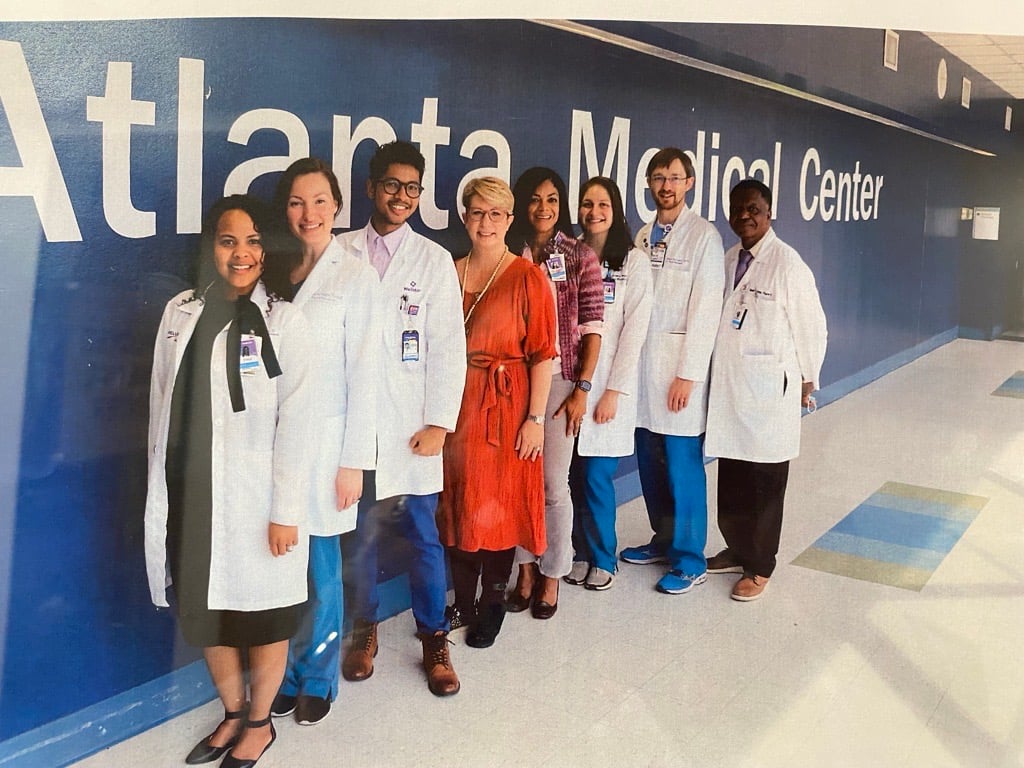
Valerie Bandy (center) and her clinical team at Wellstar Atlanta Medical Center
After a stint as director of pharmacy at Wellstar Atlanta Medical Center, she joined Tecsys as its Vice President of Pharmacy Solutions, a role that draws on every chapter that came before it: the consulting, the GPO experience, the supply chain focus and the process improvement work, sitting on “both sides of the table.” After Supply & Demand Chain Executive named Bandy a recipient of its 2026 Women in Supply Chain Forum™ Award, we spoke with her about what changes once you step behind the scenes of hospital pharmacy, why so many health systems still don’t know what they have on their shelves, and what it takes to get pharmacy and supply chain pulling in the same direction.
When you moved from staff pharmacist into leadership, what surprised you most about what happens behind the scenes?
It was interesting to understand all of the administrative concerns: all of the meetings, meeting prep and reports. We were Joint Commission accredited, and really nothing had been done with the policies in 10 years. So I dug in, aligning everything required into our policies and procedures, then training our employees and enforcing that with people who had just kind of done what they wanted for a long time.
Building clinical programs was interesting too, because physicians wanted that support, but no one had really asked for it and no one really knew how to do it. It was really rewarding because I felt like I was growing those practices in the right direction. Sometimes those smaller locations don’t get the attention: You’re not the main hospital, so you’re not going to get the money or the equipment that you need. So I fought really hard to beg, borrow and steal to make it better for them and advocate for a staff that had always kind of been complacent and not really asked for much. I think that part was surprising, that no one was really being taken care of.
That was also a time when pharmacy was starting to evolve: rounding with physicians, clinical protocols that let pharmacists make medication adjustments without calling for permission, watching for look-alike, sound-alike drugs. When I left for Cornerstone, the pharmacist who took over told me, “I had no idea what you were doing. I have such a respect and appreciation for everything you were doing on our behalf.”
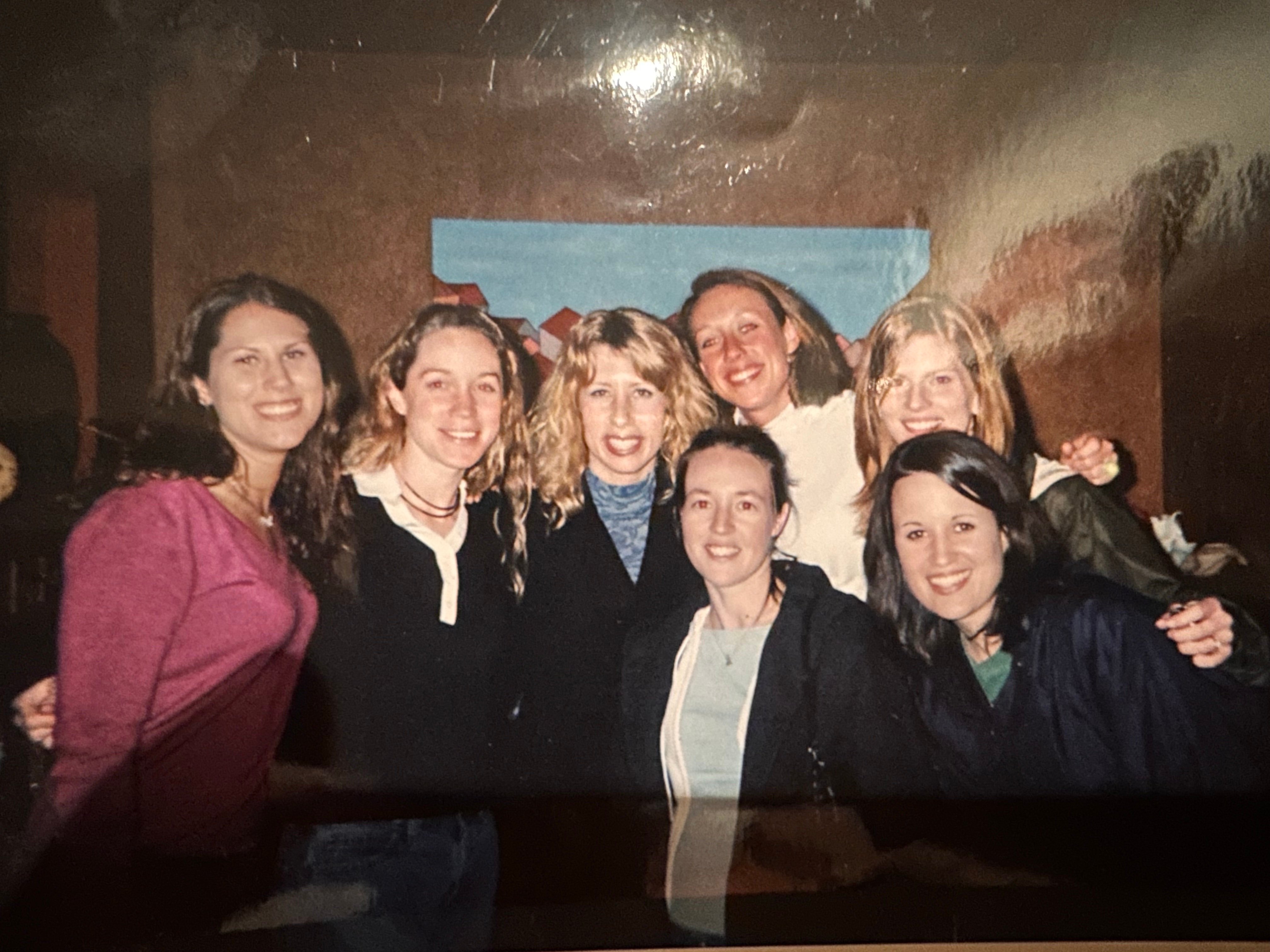
Valerie and classmates at Mercer University pharmacy school
You mentioned that identifying cost savings and revenue opportunities has been a key part of some of your roles. Do you think health systems have a full understanding of the opportunities that exist within pharmacy, or are they not taking full advantage yet?
I don’t think so, and I think it’s because pharmacy has evolved so much and grown into this trusted advisor within a hospital: They’re getting pulled into so many things. You’ve got IV admixture, sterile and nonsterile compounding, entire regulatory teams, clean room teams, med safety teams that didn’t exist before and just continue to evolve. Because they’re so focused on regulatory requirements, drug shortages, contracting and getting medication to the patient as quickly and safely as they can, there’s not a lot of time to pull up and do analytics. Do we really need this retail location open 9 a.m. to 9 p.m., or could we close at 6 p.m.? Are we looking at our contracts and maximizing our terms and conditions and market baskets, or just blindly buying because we need the item?
There’s so much opportunity for pharmacy to streamline: That’s why you have companies like Deloitte or Vizient come in to find those dollars on their behalf, because pharmacy teams don’t have time to do it themselves. It doesn’t always mean you have to cut full-time equivalents or cut services. It’s more about being strategic and making sure you’re standardized and going about it the right way.
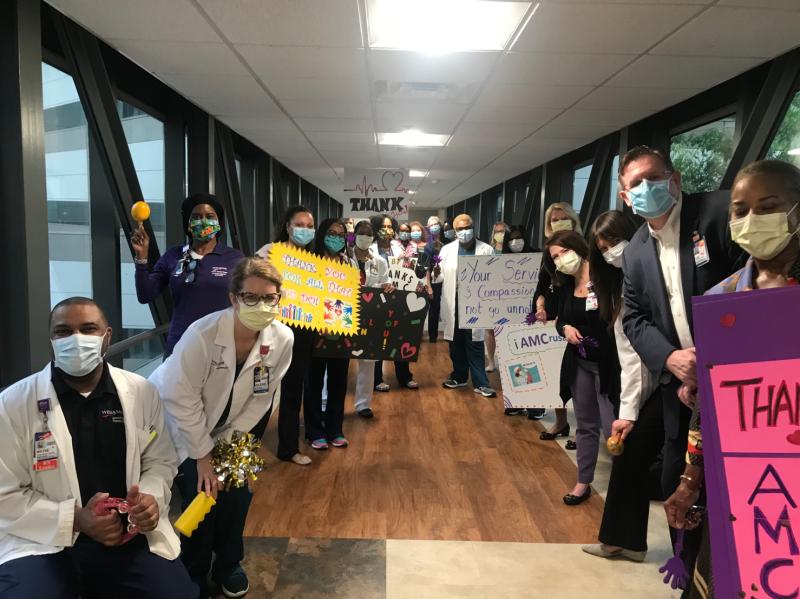
Valerie and the Wellstar Atlanta Medical Center team during the COVID-19 pandemic
Do you think health systems understand the magnitude of those opportunities, or are they just too busy putting out fires to think about pharmacy supply chain in terms of efficiencies and cost savings?
It’s a mix of both. There are lots of leaders who realize they could be a lot more efficient, whether it’s their supply chain, how they’re staffing, or the services they’re offering. But they’re also busy putting out fires just from being in those roles. You have your schedule for the day, and then you get pulled into a drug diversion investigation, or something happens on the floor that’s a sentinel event, and now you’re in a meeting to discuss what happened. Pharmacy has grown and grown and it’s getting pulled into more and more, so it’s harder for them to focus on how they can keep improving. If things are at standard and working and making money, there’s not always the urgency to move to a more advanced or leading practice.
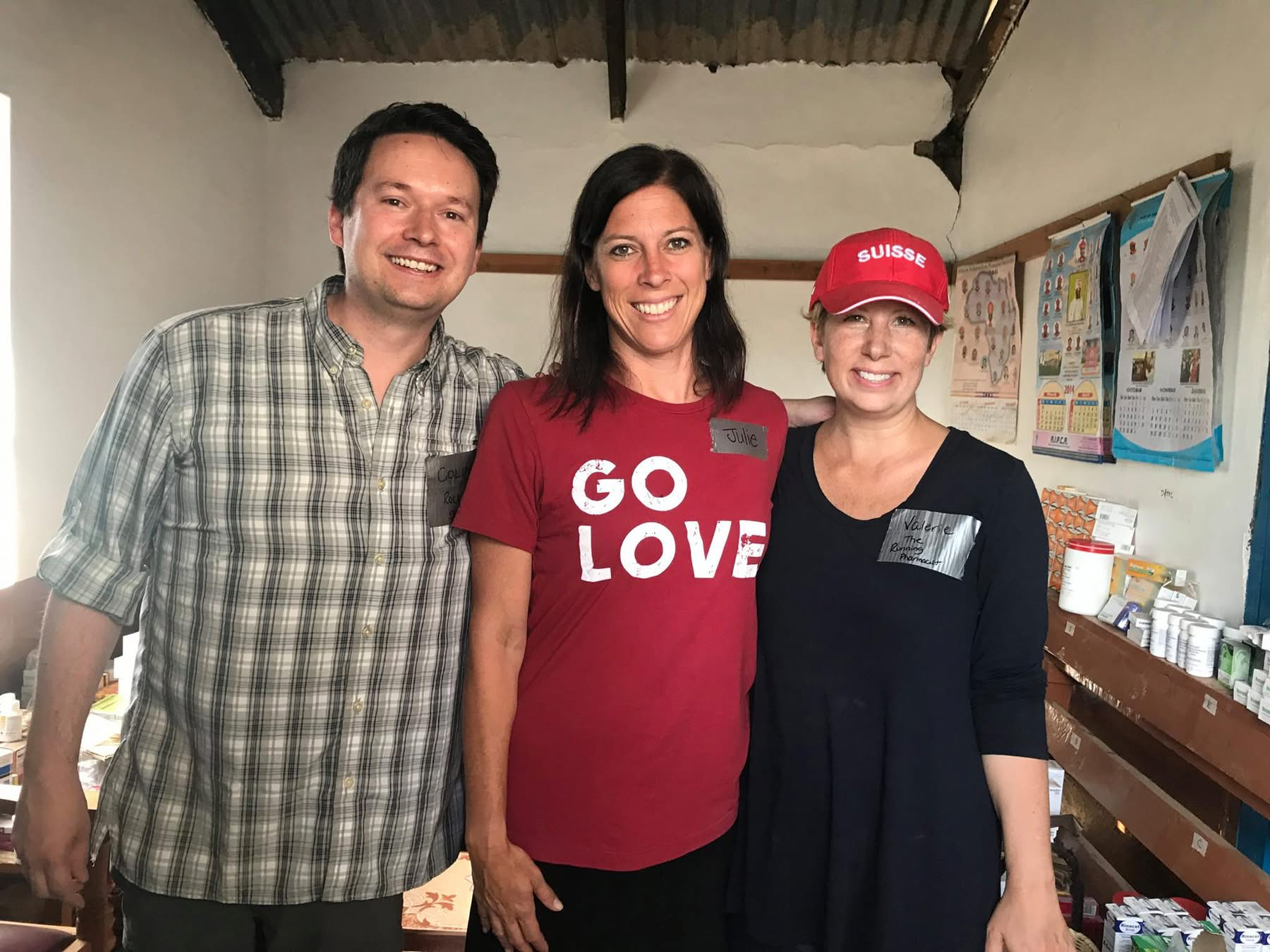
Valerie on a medical mission trip clinic in Ndibai, Kenya
When you consult with these systems, what’s the most common issue that you find coming up again and again?
Visibility across the full pharmacy network. They don’t know what they don’t know. They don’t know there are five storage areas for one drug because somebody’s hoarding it. It goes on shortage a lot, so they’ve tucked it away in someone’s office or a back room. Their automated dispensing cabinets aren’t optimized, technicians aren’t scanning in, they’re overstuffing the drawers so the par level is never correct. It’s garbage in, garbage out with their data.
There are health systems where other departments are ordering drugs pharmacy isn’t even aware of. And when you think about how much outpatient has grown – home infusion, oncology, ambulatory care, specialty mail order, retail – there’s no way for them to know what they have everywhere. That impedes them being efficient and optimizing their inventory, because if you don’t know what you have, how can you optimize it?
What’s the biggest change you’ve seen in the pharmacy profession itself?
Pharmacy has evolved so much over the years, in how the role is perceived and in all the different specialties that have grown out of it. We have dozens now that didn’t exist before, so people can do residencies, not just in pharmacy practice, but a second year in something like drug diversion or cardiovascular, a niche clinical focus, or in pharmacy administration if they want to go into leadership and operations.
There’s the old joke, the Jerry Seinfeld joke, about taking the pills from the big bottle and putting them into the small bottle. That’s no longer the case at all. Pharmacy has become so complex and so sophisticated.
Read more perspectives on healthcare supply chains in our resource center.