Model 01
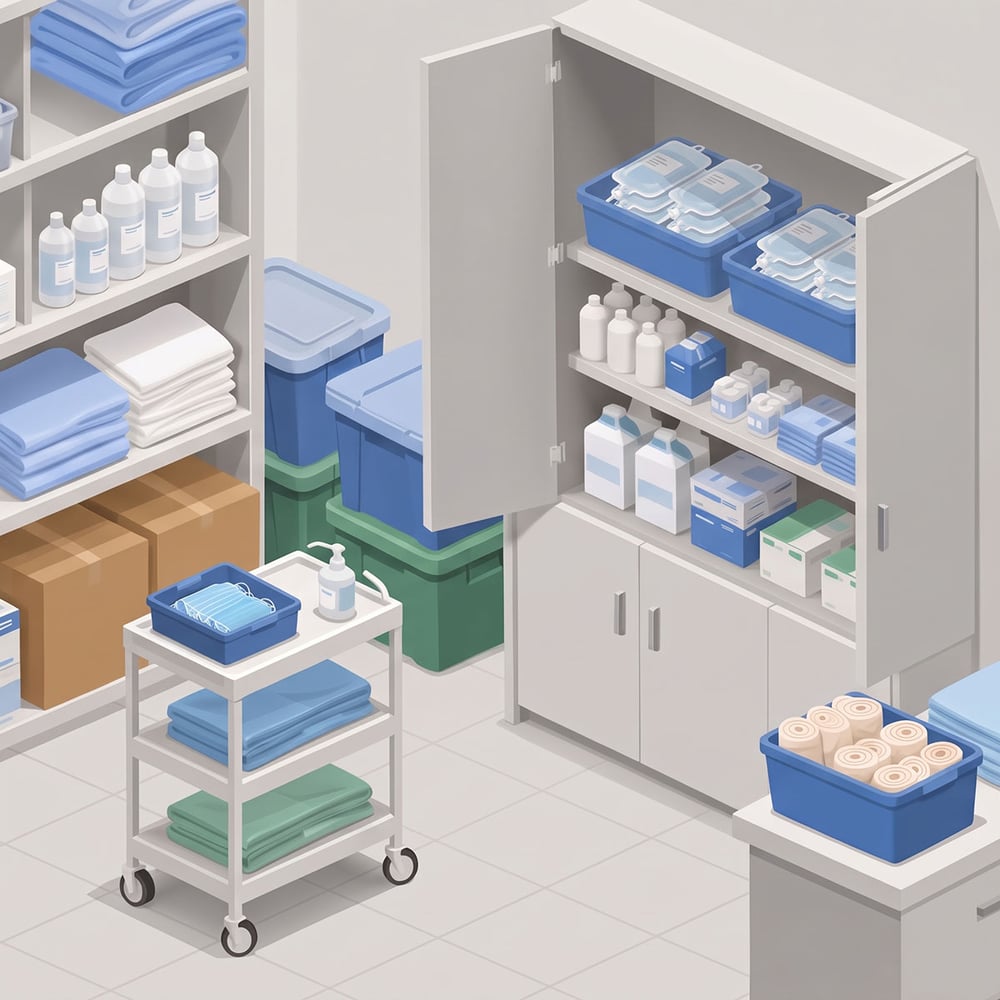
Fulfillment from within a care site
Distributor-led · stored inside the care site
Supplies are stored inside the hospital, clinic or surgery center, with the distributor delivering to the dock and supplies issued to clinical units and procedural areas as needed. Purchasing stays distributor-led throughout.
Watch for:
Manual par counting eats staff time, and incomplete lot, serial and expiry data makes recalls and expiration checks labor-intensive.
Where technology helps:
- Replenishment follows usage at each clinical unit instead of manual par counts.
- Lot, serial and expiry capture turns a recall into a query instead of a shelf-by-shelf search.
- Integration with existing purchasing and clinical systems avoids a redesign of current workflows.
Model 02
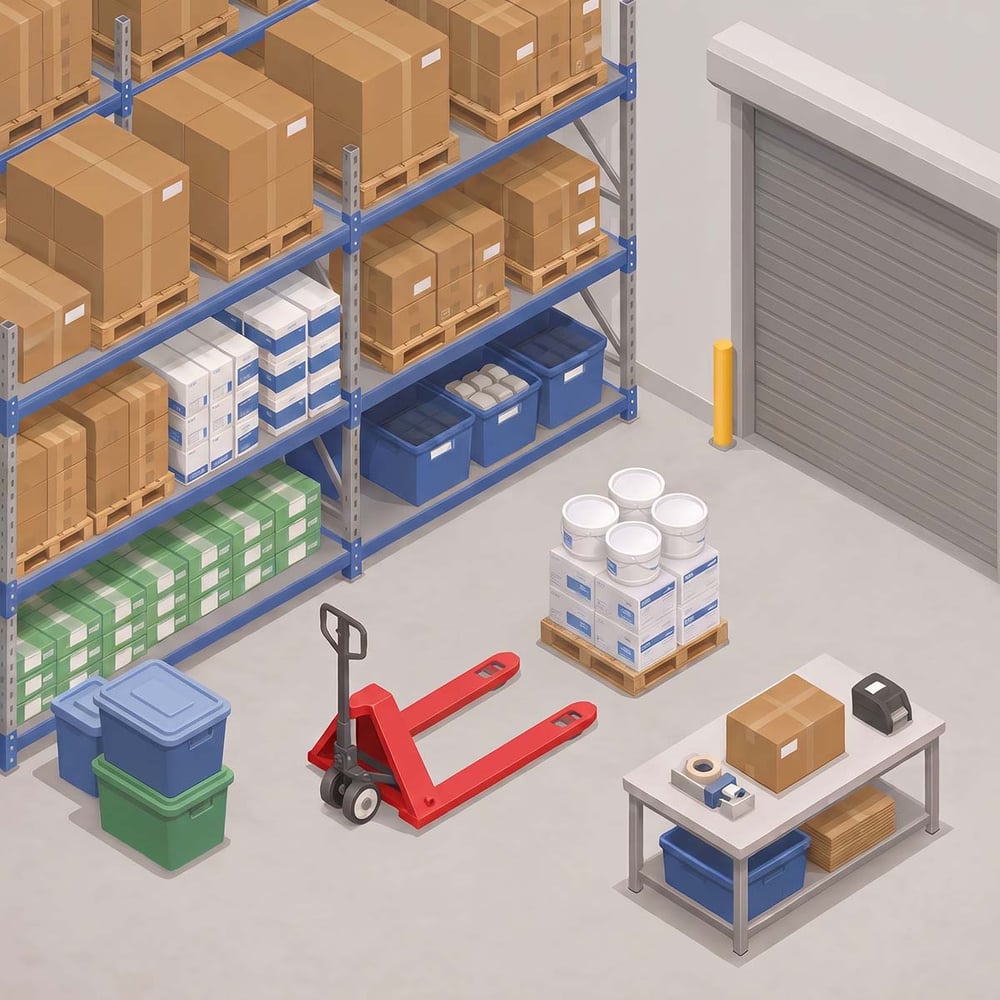
Fulfillment from a central warehouse
Distributor-led · stored outside the care site
Purchasing stays primarily distributor-led, though it may begin to blend distributor and manufacturer-direct channels as the model matures. Shipments move to a provider-run warehouse instead of individual hospital docks, and the provider consolidates inventory and replenishes care sites on its own schedule.
Watch for:
Facility buildout and dedicated staff add cost, and a warehouse error can now affect multiple hospitals at once.
Where technology helps:
- A purpose-built WMS directs receiving, putaway, picking and cycle counting as volume grows.
- One inventory record across the warehouse and care sites keeps everything reconciled.
- Clinical replenishment signals can flow back to the warehouse from actual consumption.
Model 03
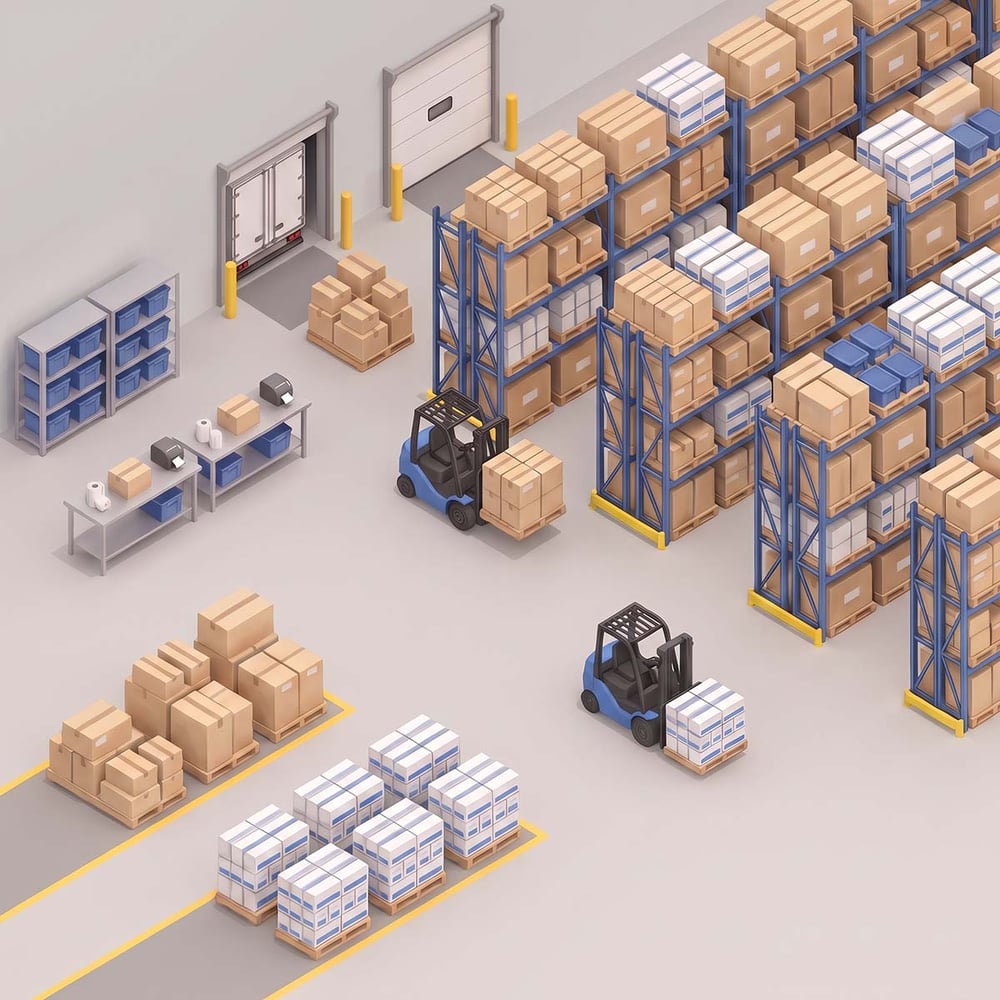
Partner-operated self-distribution
Hybrid/direct purchasing · partner-run operation
The provider keeps control of inventory and distribution strategy while leasing facility space, technology, labor or operations from a third-party logistics (3PL) provider or distributor. Purchasing can blend distributor and manufacturer-direct channels, letting high-volume categories move direct while the partner runs day-to-day fulfillment.
Watch for:
Without your own WMS, visibility and control depend entirely on the partner’s systems and reporting.
Where technology helps:
- Running on your own WMS platform preserves inventory history even if the operating partner changes.
- Point-of-use capture links shipments to actual consumption, supporting invoice validation.
Model 04
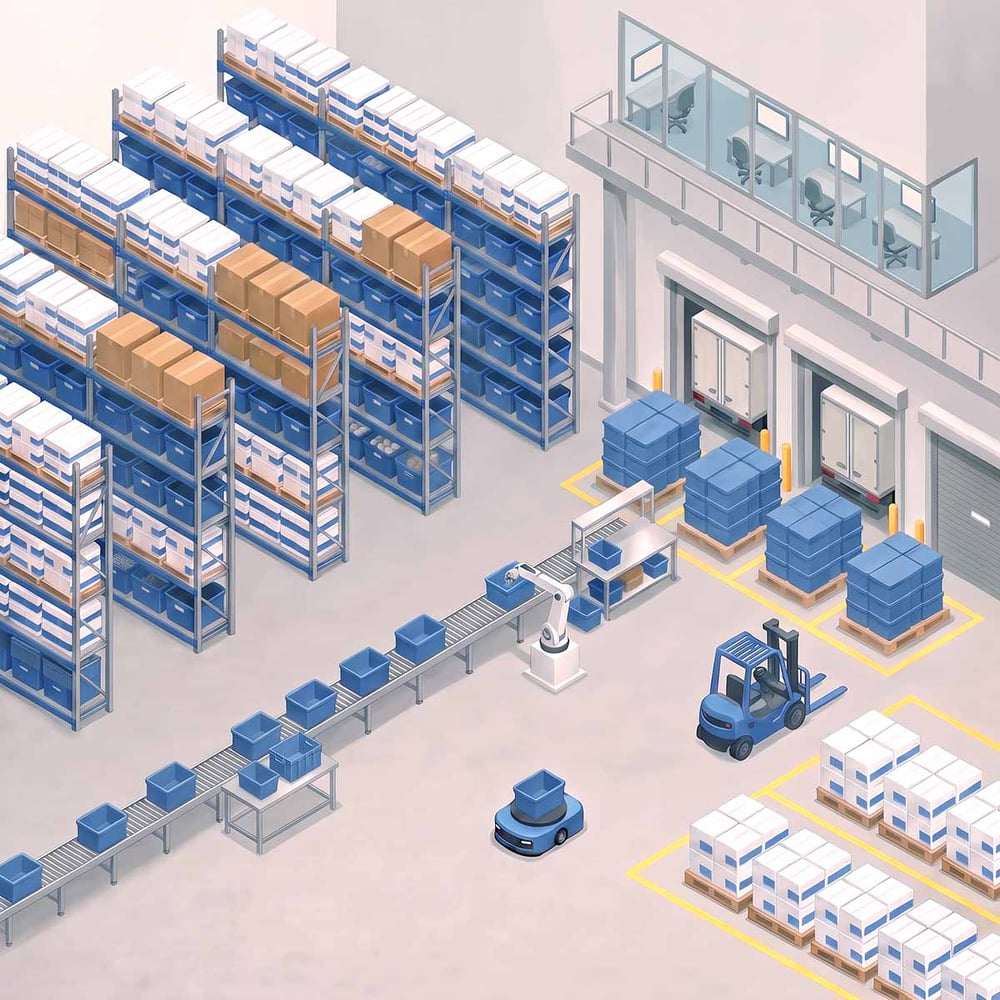
Self-distribution
Manufacturer-direct · provider-run operation
The provider owns or operates a consolidated service center, buys most supplies directly from manufacturers and manages distribution to every care site. It can reduce channel costs and increase control, but it shifts sourcing, transportation and inventory risk into the health system.
Watch for:
Startup cost is high, and a generic ERP's supply chain module can't handle the demand planning this model requires.
Where technology helps:
- A WMS coordinates high-volume receiving, picking, automation and cycle counting.
- Supplier connectivity handles onboarding, orders and invoices across many manufacturer relationships.
- Point-of-use capture links shipments to actual consumption, supporting invoice validation.
Model 05
Distribution as a business
Manufacturer-direct · separate legal entity
Distribution operates as a separate legal entity with its own profit and loss. It buys manufacturer-direct, serves the parent health system and can sell to other providers, without requiring them to share the same ERP or electronic health record (EHR) system.
Watch for:
The entity has to stand up full distributor capabilities, including billing, backorders and returns, and external customers need billing-grade accuracy.
Where technology helps:
- A WMS manages multi-owner inventory and customer-specific pricing and pick rules.
- Order management and margin visibility support the added commercial complexity.

Technology that fits any way you operate
Tecsys solutions support a focused deployment in a single storeroom, scale across a multi-site warehouse network and extend to point of use as an organization takes on more of the supply chain itself.
Clinical inventory management
Warehouse management

Hospital point of use

Pharmacy inventory management
Real-time visibility and control for medication inventory, reducing stockouts and expirations.
Gartner® Magic Quadrant™ recognition
Tecsys was named a Challenger in the 2026 Gartner® Magic Quadrant™ for Warehouse Management Systems.
40% Gartner® Healthcare Supply Chain Top 25
Forty percent of the Gartner® Healthcare Supply Chain Top 25 for 2025, as well as two Supply Chain Masters, are Tecsys customers.